
How to Reduce Finger Pressure From Bags Easily
A grocery run can turn painful in the few seconds between the car and the front door. Thin plastic handles twist into narrow cords, bag weight settles on a few fingers, and one overloaded hand starts to ache before you reach the porch. Learning how to reduce finger pressure from bags is less about building a stronger grip and more about changing how the load is organized and carried.
The good news is that small changes make a noticeable difference. Distribute weight better, avoid loading bags past their practical limit, and use a carrier that gives handles a broader, more stable place to rest. Your fingers should not have to do all the work.
Why Bag Handles Hurt Your Fingers
The problem is not always the total weight of your shopping. It is pressure. A narrow bag handle concentrates force into a very small area of your fingers. Add several handles, especially plastic or rope-style handles, and they can bunch together, slide around, and create sharp pressure points.
Movement makes it worse. When bags swing at different heights, their handles tug against one another. Your hand instinctively tightens to keep them from slipping, which adds strain to the fingers, palm, wrist, and forearm. This is why a load that seems manageable at the trunk can feel much heavier by the time you get inside.
People who already deal with arthritis, reduced grip strength, hand fatigue, or wrist discomfort may notice the problem sooner. But even strong hands can get sore when they repeatedly carry thin-handled bags the same way.
How to Reduce Finger Pressure From Bags Before You Leave the Store
Start with the way items are packed. Ask for weight to be spread across more than one bag rather than placing every dense item into a single overloaded bag. Cans, jars, bottles, pet food, and cleaning products can add up quickly. A bag that looks full of light items may be easy to carry, while a smaller bag packed with dense goods can put far more stress on your hand.
Keep the heaviest items close to the bottom and balance them across bags when possible. This helps prevent a bag from tipping sideways and pulling hard on one or two fingers. It also reduces the urge to grip tighter as you walk.
Reusable bags can be especially helpful because many have wider, sturdier handles than standard plastic bags. Still, a wide handle does not make an overloaded bag automatically comfortable. The best approach is to use reusable bags for a balanced load, not as an excuse to carry everything in one trip.
If you are shopping with children or making several stops, consider separating purchases by destination. Put items that need to go indoors right away in one group and non-urgent items in another. Fewer bags in each hand means less pressure, less tangling, and fewer dropped items.
Give Handles a Better Place to Rest
Your fingers are designed to grip, not to serve as hooks for a bundle of narrow handles. The most effective way to relieve pressure is to move the bag handles off your fingers and onto a wider carrying surface.
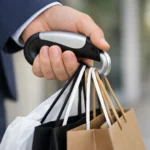
A dedicated bag carrier does exactly that. Instead of allowing handles to dig into your skin, it gathers them into one organized grip that is broader and easier to hold. The bags stay together, their weight is spread more evenly, and you are less likely to lose control when one handle slides or stretches.
This is where a purpose-built option such as The BAGGLER® can make a practical difference. Its patented design holds multiple thin-handle, rope-handle, and plastic shopping bags in one place, with a carrying capacity of up to 54 pounds. Rather than juggling a handful of separate handles, you carry one organized grip. That can mean fewer trips, fewer tangled bags, and less pressure concentrated on your fingers.
A bag carrier is not a reason to exceed what your body can comfortably carry. Its job is to improve comfort and control, not turn an unsafe load into a sensible one. If a load feels too heavy, split it up or make another trip.
Look for a stable, comfortable grip
Not all handle solutions work the same way. A useful carrier should be easy to load, keep bags from slipping off, and provide enough surface area to reduce the sharp pull of individual handles. It should also work with the types of bags you actually use, whether those are grocery-store plastic bags, reusable totes, retail bags, or drawstring-style bags.
Durability matters, too. A carrier is most useful when you can keep it in the car, use it repeatedly, and clean it easily after a spill. A compact, dishwasher-safe design is a practical fit for grocery routines because it is ready when the next errand comes around.
Carry Smarter From the Car to the House
How you hold bags matters almost as much as what you use to hold them. Keep your wrists in a neutral, straight position when possible. Avoid bending your wrist sharply upward or allowing a heavy load to hang from just the tips of your fingers.
Try to divide bags between both hands, even if one side has fewer items. Balanced carrying reduces the pull on one shoulder and helps you walk more naturally. If you use a carrier, make sure the bags are centered before lifting. A lopsided bundle can twist your wrist and make the load feel unstable.
When lifting bags out of a cart or trunk, bend at your knees and bring the handles close to your body before standing. Do not grab a bundle with your fingertips and jerk it upward. That quick motion is often where fingers get pinched and handles cut in.
For a longer walk, take a moment to reset your grip instead of pushing through discomfort. Set the bags down on a safe surface, reposition the handles, and continue. A 10-second pause is better than straining your hand or dropping a bag of glass jars on the driveway.
Build a Bag System That Prevents the Problem
The easiest carrying solution is the one you will use every time. Keep reusable bags and a bag carrier together in your vehicle, ideally near the trunk or cargo area. A foldable bag set stored in a pouch is easier to remember than loose totes rolling around in the back seat.
Use a simple routine: load reusable bags for comfort, group loose plastic or retail bags onto a carrier, then divide the final load between both hands. This system cuts down on the familiar scramble of trying to separate tangled handles while the cart is still in the parking lot.
It also makes unloading easier. Instead of making multiple awkward trips with bags sliding down your fingers, you can carry a more controlled bundle and keep items together by category. That is useful for busy parents, commuters bringing home errands after work, and anyone who wants to get groceries inside without turning the process into a hand workout.
When Finger Pressure Needs More Attention
Temporary marks on your fingers after carrying bags are common, but ongoing pain is a signal to change your approach. Stop carrying the load if you notice numbness, tingling, weakness, swelling, or pain that does not improve after rest. Repeated discomfort can be a reason to talk with a qualified health professional, particularly if you have an existing hand, wrist, or joint condition.
For everyday shopping, prevention is usually straightforward: carry less per hand, distribute weight, and stop letting narrow handles concentrate the full load on your fingers. A better bag setup turns the walk from the car into a routine task instead of the most uncomfortable part of the trip.
The next time you unload groceries, pay attention to the moment your grip starts to tighten. That is the point where a balanced load and a better carrier can earn their place in your routine.
 Previous Post
 Next Post