
How to Carry Shopping Bags Safely
One overloaded trip from the car to the kitchen can leave your fingers aching, your shoulders tense, and a carton of eggs rolling across the driveway. That is usually when people start wondering how to carry shopping bags safely, especially when the load looks manageable at first and then gets awkward fast.
The problem is not just weight. It is how that weight sits in your hands, how the handles cut into your skin, and how quickly a few separate bags turn into one tangled mess. Safe carrying starts with understanding that groceries and retail bags do not fail all at once. They fail gradually through strain, poor balance, slippery grip, and repeated bad lifting habits.
Why shopping bags become unsafe so quickly
Most shopping bags are designed to hold items, not to protect your hands and joints while you carry them. Thin plastic handles, narrow paper loops, and rope handles can all concentrate pressure in a very small area. Even a moderate load can feel much heavier when that pressure is focused across your fingers.
That pressure matters more than many people realize. It can aggravate hand fatigue, reduce grip strength mid-carry, and make you more likely to drop a bag when you are climbing stairs, opening a door, or trying to carry too many at once. For older adults, parents juggling kids and bags, or anyone with wrist or grip discomfort, the risk goes up quickly.
There is also the stability issue. Bags shift. Bottles slide to one side. A bag with cleaning products can swing differently than a bag with cereal boxes. If the load is uneven, your body compensates without asking permission. That can mean a twisted wrist, a shrugged shoulder, or a strained forearm before you even get inside.
How to carry shopping bags safely from the start
The safest carry begins before you lift anything. If one bag is packed with cans and another holds only bread and lettuce, you are already setting yourself up for an awkward trip. A few seconds of rearranging saves a lot of strain later.
Start by checking the heaviest items. Spread dense groceries like milk, juice, canned goods, and jars across multiple bags instead of stacking them together. Try to keep each bag at a manageable weight, especially if you know you will be carrying everything farther than a few steps. Heavy does not have to mean unsafe, but concentrated weight usually does.
Handle type matters too. Bags with thin handles tend to cut into your fingers first, even when the load is not extreme. If you are using reusable bags, choose ones with strong stitching and handles that sit more comfortably in the hand. If you are using store bags, make sure the handles are not already stretched, damp, or tearing at the connection point.
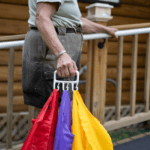
A compact carrying tool can make a big difference here because it gathers multiple bag handles into one more comfortable grip. Instead of letting several thin handles dig into your hand, it spreads the load more evenly and helps keep bags organized. That means less finger pain, less slipping, and fewer sudden drops when one bag shifts out of place.
Balance beats brute force
A lot of people think safe carrying means building up tolerance and muscling through. Usually, the better answer is balance. If you carry all the weight on one side, your body leans to compensate. That puts extra stress on your shoulder, lower back, and wrist, even if the trip is short.
If you are carrying bags by hand, split the load evenly between both sides whenever possible. Match heavier bags with heavier bags and lighter bags with lighter bags. You do not need perfect symmetry, but you do want to avoid carrying one crushing load in one hand and a featherweight bag in the other.
This is especially important on stairs, uneven walkways, or icy surfaces. When your body is tilted by an unbalanced load, your footing gets less stable. A safer carry keeps your center of gravity more neutral and your arms closer to your sides instead of stretched outward.
Use your whole body, not just your fingers
Finger strain is often the first thing people notice, but it is only part of the problem. The way you lift and move matters just as much.
When picking bags up from a cart, trunk, or floor, bend at your hips and knees rather than rounding forward from your back. Keep the load close to your body as you lift. If you reach far away from your center to grab a bag, the weight feels heavier and puts more stress on your shoulder and lower back.
Once you are walking, try not to grip harder than necessary. A death grip usually means the handle is uncomfortable, unstable, or both. The safer solution is not always squeezing tighter. Often it is improving the carrying setup so the load is easier to control.
If you need to stop and readjust, stop and readjust. There is no prize for making it from car to kitchen in one trip if that trip leaves your hands numb or sends a bag crashing to the ground.
Common mistakes that lead to pain and dropped items
Some carrying habits feel efficient but create avoidable problems. Hooking several bags over your fingers is one of the biggest. It may save time for a moment, but it concentrates pressure, reduces circulation, and makes it harder to release the bags safely once you reach your destination.
Another common mistake is overloading one strong bag because it seems more durable than the others. Even if the bag holds, your hand and wrist still take the full hit. Safe carrying is not just about whether the bag survives. It is about whether your body handles the load without strain.
People also tend to rush the final part of the trip. They open the door while still holding everything, twist sideways through a narrow entry, or lower bags one-handed onto a counter. That is where jars clink together, produce gets crushed, and handles slip free. Slow down for the transition points. They are where most drops happen.
How to carry shopping bags safely when you have pain or limited grip
If you deal with arthritis, wrist pain, tendon irritation, or reduced grip strength, the usual advice to simply carry less is not always realistic. You still need groceries. You still need household items. The better approach is reducing stress at the contact points and improving control.
That may mean making more than one trip, but it can also mean changing the way the bags are carried. A better grip surface, a more organized carry, and a tool that consolidates multiple handles can significantly reduce the sharp pressure that builds in your fingers and palm.
Reusable bag systems can help here as well, especially when they are designed to stay upright, fold away compactly, and handle everyday loads without becoming bulky. The goal is not complexity. It is making a routine task feel less punishing.
For many shoppers, that is exactly why tools like The BAGGLER® exist. A patented bag carrier is a simple fix to a familiar problem – less handle bite, better organization, and a more secure hold on multiple bags at once.
A safer setup for car-to-home trips
The car-to-home stretch is where bag carrying gets messy. You are often tired, parked at an awkward angle, and trying to decide whether one trip is worth the strain. This is where a little planning helps.
Before lifting, group the bags by destination. Cold items together. Pantry items together. Fragile items where they will stay upright. This reduces reshuffling at the door and cuts down on the moments when bags swing into each other.
If possible, place heavier bags where you can reach them without twisting. Pull them close to the edge of the trunk or seat before lifting. Then carry the most stable load first. A bag full of cans is easier to control than a mixed bag with detergent, grapes, and bread fighting for the same space.
If you use reusable bags regularly, keep them clean, folded, and ready in the car. A washable, compact system is easier to reuse consistently, and consistency usually leads to better packing habits.
What safe carrying really comes down to
Most people do not need a lecture on lifting. They need a setup that works in real life. Safe carrying means less pressure on your hands, better weight distribution, fewer tangled handles, and a load you can actually control from store to car to home.
That might mean repacking a few bags, taking an extra trip, or using a purpose-built carrier instead of asking your fingers to do all the work. Small changes matter because this is not a one-time task. It is a routine. And routines either wear you down or work better over time.
If carrying bags has become one of those small recurring frustrations that leaves your hands sore and your patience short, that is a good sign the system needs fixing, not your tolerance. The safest carry is the one that feels stable, organized, and easy enough to repeat tomorrow.
 Previous Post
 Next Post