
Best Bag Holder for Car to House
You feel it the second you grab every grocery bag at once – thin handles digging into your fingers, one bag slipping sideways, another tipping over before you even reach the front door. A good bag holder for car to house trips is not a luxury item. It is a practical fix for one of the most repeated annoyances in everyday life.
If you make regular grocery runs, shop for a family, or just want fewer trips from the trunk, the right carrying tool changes more than comfort. It changes control. Instead of wrestling loose handles and overloaded hands, you get a cleaner grip, better balance, and less chance of dropping eggs, produce, or that one bottle that always seems determined to roll away.
What a bag holder for car to house should actually do
A lot of products claim to make carrying easier, but this job is pretty specific. A true bag holder for car to house use needs to do three things well. It should reduce pressure on your hands, keep multiple bags organized in one grip, and hold enough weight to matter in a real shopping trip.
That first part matters more than many people realize. Standard grocery bag handles concentrate force into a narrow line across your fingers and palm. That is uncomfortable for anyone, but it is especially frustrating if you deal with hand fatigue, wrist pain, arthritis, or reduced grip strength. A well-designed holder spreads that load over a broader, more ergonomic shape so the carry feels more stable and less punishing.
Organization is the second piece. Without a holder, bags twist around each other, separate in the parking lot, or snag on your wrist while you try to unlock the door. A useful carrying tool gathers those handles into one secure point, which means fewer tangles and fewer awkward adjustments halfway up the walkway.
Then there is capacity. If a bag holder only handles a couple of light bags, it does not solve much. Real life means gallon jugs, canned goods, cleaning supplies, pet food, and quick grab items all packed together. Strength is not a bonus feature here. It is the baseline.
Why the car-to-house carry is harder than it should be
This part of the shopping routine gets overlooked because it seems simple. Park, unload, walk inside. But it is often the most awkward stretch of the whole trip.
You are lifting from a low trunk or back seat, often twisting at the same time. You are trying to carry more in one trip because nobody wants three or four rounds back to the car. One hand may be holding keys, opening a door, or guiding a child. If it is raining, dark, or cold, the process gets even less forgiving.
That is why so many people put up with an uncomfortable system for years without realizing there is a better one. The problem is not that they need to “carry better.” The problem is that bag handles were never designed for comfort, control, or repeated use.
The design details that make a real difference
When choosing a carrying tool, shape matters. A rounded, hand-friendly grip is going to feel better than a narrow or sharply edged one. The point is not just comfort in the moment. Better ergonomics help you carry with less strain, especially when the load gets heavy.
Material matters too. A bag holder should feel durable, not flimsy, and it should hold up to regular use in the car, kitchen, garage, or store. If it is going to become part of your routine, it needs to survive bumps, drops, and repeated loading without cracking or losing shape.
Handle compatibility is another detail people often miss. Shopping bags are not all the same. Some have thin plastic handles, some have rope handles, and reusable bags can be thicker and bulkier. A holder that works with only one style is limiting. A better design accommodates the mix most people actually bring home.
And then there is portability. If the tool is too bulky, too awkward, or too easy to forget, it will not get used. The most effective products are compact enough to keep in the car and simple enough to grab without thinking.
One-trip convenience is only part of the value
Most shoppers want a bag holder because they are tired of making multiple trips. That is fair. But the bigger win is often how much easier the whole transfer feels.
When bags are grouped securely, loading and unloading become more controlled. You can lift more confidently from the trunk. You can walk without the swinging, twisting motion that causes items to bump into your legs or knock into each other. You can get through the doorway without stopping to re-grip every few steps.
This is especially helpful for older adults, parents carrying more than groceries, and anyone who simply does not want routine errands turning into a hand and wrist workout. Small improvements in daily tasks add up fast when those tasks happen every week.
Reusable bags make the right holder even more useful
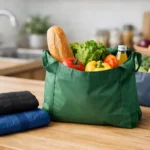
Reusable shopping bags are a smart move, but they are not automatically easier to carry. In fact, once they are fully packed, they can become heavy fast. Their wider handles may feel better than thin plastic for a while, but a loaded reusable bag still puts pressure on your hand and still becomes awkward when you are carrying several at once.
That is where a holder earns its place. Instead of managing multiple bag shapes and weights separately, you create one organized carry point. This helps reusable bags work like a system instead of a pile.
For shoppers trying to reduce waste, that matters. Convenience and sustainability need to work together, or people drift back to what is easiest. A carrying solution that supports reusable bags makes the eco-friendly choice more realistic for everyday life.
What to watch out for before you buy
Not every bag carrier is built for regular use. Some are little more than shaped plastic hooks with limited grip comfort and unclear weight support. Others look promising but fail when bags shift or heavy loads create pressure points.
A few trade-offs are worth considering. If you only carry one or two very light bags at a time, you may not notice a major difference from a basic holder. But if your usual routine includes groceries for a household, warehouse store runs, or mixed retail purchases, quality becomes more important quickly.
You should also think about who is using it. A product that feels fine to someone with strong grip and no pain issues may still not be ideal for a person with hand sensitivity or reduced dexterity. The right fit depends on your routine, your bag types, and how much comfort matters in repeated use.
A smarter standard for a bag holder for car to house use
The best solutions do not ask you to change your habits. They fit the habits you already have. Keep the holder in your car. Load your grocery or retail bags as usual. Gather the handles in seconds and carry them with one more comfortable, more secure grip.
That is the appeal of a well-designed tool like The BAGGLER. It was built around a simple but stubborn problem: bags are easy to fill, hard to carry, and harder than they should be to manage from store to vehicle to home. A patented ergonomic design, compatibility with common bag handle styles, and a 54 lb carrying capacity make that kind of product useful in the real world, not just in theory.
The best part is that this kind of fix does not require a learning curve. It is not a gadget you have to figure out. It is a practical tool that reduces pain, helps prevent dropped items, and makes shopping feel less chaotic.
The everyday test that matters most
A good carrying tool should prove itself on the nights when you are tired, the weather is bad, and the trunk is full. That is the real test. Not whether it looks clever in packaging, but whether it helps you get from car to house with less strain and fewer hassles.
If your current system involves red marks on your hands, bags cutting into your fingers, or that awkward shuffle to keep items from falling over, there is room for improvement. The right bag holder does not make errands glamorous. It makes them easier, which is a lot more useful.
And for a task you repeat week after week, easier is more than enough reason to make the switch.
 Previous Post
 Next Post