
A Grocery Delivery Bag Solution That Actually Works
The hardest part of a grocery delivery often happens after the driver leaves. Bags pile up by the door, cold items need attention, thin handles cut into your fingers, and one overloaded trip can leave produce bruised or a jar rolling across the floor. A practical grocery delivery bag solution is not about adding more stuff to your routine. It is about making the last few feet – from doorstep or vehicle to kitchen – easier to manage.
For many households, grocery delivery saves time. But it can also create a familiar carrying problem: a dozen loosely packed bags, mixed handle types, and more weight than any one hand should handle at once. The right setup keeps bags organized, supports a comfortable grip, and gives you better control before something drops.
Why Grocery Delivery Bags Create Carrying Problems
Delivery bags are designed for transport, not necessarily for the person bringing them inside. Paper grocery bags can have short handles that pull apart under a heavy load. Plastic bags stretch and tangle. Reusable bags may be strong, but their handles can still bunch together and put all the pressure on a few fingers.
The issue is rarely just weight. It is weight distributed poorly. When ten narrow handles press into the same spot on your hand, even a manageable load becomes uncomfortable. Add rain, a long driveway, stairs, a child to guide inside, or a delivery left at the curb, and the small hassle becomes a daily strain.
A useful solution should address three jobs at once: hold multiple bag handles together, make the load more comfortable to grip, and keep bags from swinging or slipping loose. If it only solves one of those problems, you may still be making several trips or wrestling with tangled handles at the door.
What a Grocery Delivery Bag Solution Should Do
The best tools are straightforward. They should work with the bags you already receive, without requiring you to repack everything before you can get indoors. That means compatibility matters. A carrier should accommodate thin plastic handles, paper-bag handles, rope handles, and the handles on your own reusable bags.
Comfort matters just as much. A wider, shaped grip spreads pressure across your hand instead of concentrating it on your fingers. This can make a noticeable difference for shoppers with hand fatigue, wrist discomfort, reduced grip strength, or arthritis. It also helps anyone who has tried to carry a week’s worth of groceries in one rushed trip.
Strength is the other nonnegotiable. A carrier that feels flimsy defeats the point. Look for a clearly stated capacity and solid construction, especially if you routinely order beverages, canned goods, pet food, or bulk items. The BAGGLER® is built to carry up to 54 pounds, giving users a dependable way to gather and carry several bags without relying on their fingers alone.
There is a trade-off worth considering here. One large load can be convenient, but it should still be a load you can safely control. A strong bag carrier does not mean every order belongs in one trip. Use it to consolidate a sensible number of bags, keep your posture steady, and make fewer trips when the weight allows.
Keep bags upright and loads predictable
A bag carrier improves the way handles feel in your hand, but bag placement still matters. Keep heavier bags closest to your body and balance the load from side to side when you can. Bags holding glass jars, eggs, or prepared foods deserve special attention. If they are loosely packed or top-heavy, carry them separately rather than hanging them at an angle with everything else.
For doorstep deliveries, take ten seconds to sort before lifting. Group chilled and frozen goods together so they reach the refrigerator first. Separate anything that needs to stay upright. This small pause prevents the common mistake of trying to carry every bag at once, only to set everything back down when a handle twists or a carton begins to tip.
A Better System Starts Before Checkout
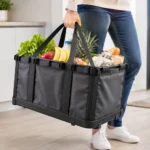
A grocery delivery bag solution works best when it is part of a simple routine, not another item to remember. Keep a bag carrier near the entryway, in the trunk, or in the spot where delivery bags usually land. When it is within reach, you can gather the handles and go instead of making repeated trips while groceries warm up outside.
If you use reusable bags for pickup orders or store runs, choose bags that fold down easily but hold their shape when filled. Washable bags are especially useful for meat packages, produce, and the occasional spill. A pouch-based bag set can keep empty bags contained in the car, so they are ready when you need them rather than crumpled under a seat.
The most efficient setup usually combines reusable bags with one durable carrier. The bags handle the groceries. The carrier handles the painful part: bringing multiple bags together in a secure, comfortable grip. This approach also means you are not dependent on the type of bag a store or delivery service happens to use that week.
Make the trip from car to kitchen less chaotic
A delivery order can arrive in more bags than expected, especially when items are packed by department or temperature. Start with a clear path. Move shoes, packages, or other obstacles away from the door, particularly if you are carrying bags up steps or through a narrow hallway.
Then prioritize what needs immediate care. Bring in frozen food, refrigerated items, and any bag holding fragile goods first. Use the carrier for the remaining bags in manageable groups. This is faster than trying to balance all the handles in both hands, and it reduces the chance of a bag snagging on a door handle or sliding off your wrist.
Parents and caregivers may find this particularly helpful. One hand may need to hold a child’s hand, manage a leash, or steady a door. Consolidating several bags into a single secure handhold gives the other hand more freedom when it matters.
Don’t Confuse More Bags With Better Organization
It is tempting to solve grocery delivery clutter by buying more tote bags, bins, or storage containers. Those tools can help in specific situations, but they do not automatically solve the carrying problem. More containers can mean more transferring, more cleanup, and more items taking up space.
Use bins when you need to protect a spill-prone order in the car or carry loose items. Use insulated bags for a long drive or a delay before refrigeration. But for ordinary delivery bags sitting at your doorstep, the immediate need is usually a secure way to lift and move what is already packed.
That is why a compact bag carrier earns its place in a practical household. It is small enough to keep where you use it, simple enough to grab without instructions, and useful for more than groceries. Retail bags, library books, takeout bags, laundry items, and household supplies all create the same handle-and-weight problem.
Features That Matter More Than Fancy Extras
When comparing bag-carrying tools, focus on the details that affect everyday use. A smooth surface is easier to clean after a wet grocery bag or a leaky container. Dishwasher-safe construction is a useful advantage for a tool that may regularly touch bags from store floors, car trunks, and sidewalks.
A secure closure or handle design also matters. The goal is to keep bag handles gathered without forcing you to squeeze tightly the whole way. If loading and unloading feels awkward, the tool will likely stay in a drawer. The best design should feel intuitive on the first use: place handles inside, close or hold the carrier as intended, and carry the load with a more natural grip.
Patented design is meaningful when it leads to a clear practical benefit. In this case, that benefit is better control of multiple bags, less pressure on your hands, and fewer dropped groceries. The BAGGLER is Made in Maine and designed around that specific everyday problem, rather than asking shoppers to change how they buy groceries.
The Small Upgrade You Feel Every Week
Convenience is not always a high-tech feature. Sometimes it is walking inside with your groceries without red marks across your fingers, plastic handles cutting into your hand, or bags scattered across the driveway. A dependable grocery delivery bag solution gives you a more controlled way to finish the job delivery started.
Keep the tool where your bags arrive, use it for sensible loads, and let the routine become automatic. The next time an order shows up with more bags than you expected, you will have a better answer than trying to hook every handle over your fingers and hoping nothing slips.
 Previous Post
 Next Post