
Grocery Bag Pain Relief That Works Every Trip
A grocery run can be quick. Carrying everything inside rarely is. Thin plastic handles dig into fingers, reusable bag straps twist together, and one overloaded hand can leave your palms, wrists, and forearms aching before the groceries reach the counter. Grocery bag pain relief is not about making your hands tougher. It is about changing how the load sits in your hand and how many bags you try to carry at once.
The good news is that a few practical adjustments can make the trip from cart to car and car to kitchen much more comfortable. Better bag choices, smarter loading, and a proper carrying tool can reduce the pressure points that make everyday shopping feel harder than it should.
Why Grocery Bags Cause So Much Hand and Wrist Pain
Most shopping bags are designed to hold items, not to be comfortable to carry. A narrow handle concentrates the weight of a full bag into a small strip across your fingers. The heavier the load, the more that strip presses into soft tissue and strains your grip.
Plastic grocery bags are especially frustrating because their handles stretch, bunch, and slide. Rope-handle bags can be easier on the hand, but several handles still stack into a tight bundle that pulls unevenly. Reusable bags often hold more weight, which is useful until one bag becomes the entire load for one wrist.
Pain can also start higher up. When your fingers are working hard to keep handles from slipping, your wrist and forearm stay tense. If you carry bags with one arm while opening doors, managing keys, or helping a child, your shoulder and back may compensate too. That is why the problem is not only the bag weight. It is the grip, the balance, and the awkward movement required to control it.
A single heavy trip may only cause temporary soreness. But if hand, wrist, or grip discomfort is frequent, sharp, persistent, or accompanied by numbness, it is wise to speak with a qualified health professional. A better carrying setup can reduce everyday strain, but it is not a substitute for medical care.
Grocery Bag Pain Relief Starts With Better Load Control
The fastest way to make groceries easier to carry is to stop treating every bag as equal. A bag filled with canned goods, bottles, and a large detergent container should not be carried like a bag of bread and paper towels. Before leaving the store or unloading the car, take a moment to balance the load.
Put dense items into more than one bag rather than concentrating them in a single large tote. A few cans placed across two bags are generally easier to manage than a heavy bag in one hand and a nearly empty one in the other. The goal is not to carry the maximum number of bags possible. It is to make each hand carry a manageable, balanced share.
Keep fragile items separate from heavy groceries when you can. This protects eggs and produce, but it also prevents the need to grip a bag tightly to keep everything from shifting. When bags are packed well, you can carry them with a more relaxed hand.
Avoid the Finger Hook Carry
Many shoppers loop bag handles over the tips or middle joints of their fingers. It feels efficient because it leaves the palm open, but it puts pressure exactly where thin handles hurt most. It can also make the bag swing, forcing your fingers to tighten with every step.
If you are carrying only one light bag, placing the handle deeper into the palm can spread some pressure. For multiple bags or heavier loads, however, the better answer is to use a broad, structured grip that gathers handles together. A wider surface spreads force across more of your hand instead of allowing several narrow handles to pinch in separate places.
Carry Less Per Trip When It Makes Sense
There is no prize for carrying every grocery bag in one trip. If the route includes stairs, a long driveway, ice, or an awkward doorway, two lighter trips may be the safer and more comfortable option. This is especially true when you are already dealing with hand or wrist soreness.
That said, making multiple trips is not always practical. Parents may have children to supervise, commuters may be unloading in a busy parking area, and anyone with limited mobility may want fewer trips between the vehicle and home. In those cases, organization matters even more. A secure carrier that keeps handles together can make a full load more manageable without forcing your fingers to do all the work.
Use a Bag Carrier Instead of Your Fingers
A dedicated bag carrier is a simple tool with a meaningful job: it replaces a bundle of cutting handles with one more comfortable grip. It gathers multiple grocery, retail, and reusable bag handles into a single carrying point, reducing tangles and helping prevent bags from slipping apart.
This approach works particularly well for people who shop for a household, carry groceries up stairs, or routinely transport more than a couple of bags from the car. Instead of juggling handles one by one, you load them onto the carrier, close or secure the system as designed, and carry the load with a broader handhold.
The BAGGLER® is built for exactly this kind of everyday use. Its patented design accommodates thin-handle, rope-handle, and plastic shopping bags, while its 54-pound carrying capacity gives shoppers a practical option for heavier loads. Made in Maine and dishwasher-safe, it is designed to be the compact tool you keep in the car, kitchen, or reusable-bag pouch rather than another bulky item to manage.
A bag carrier does not make groceries weightless. What it can do is reduce the sharp pressure and handle chaos that make a normal load feel worse than it is. The difference is often most noticeable when carrying several bags at once: fewer loose handles, fewer dropped items, and less need to clench your hand around a tangled bundle.
Choose Reusable Bags That Help, Not Hinder
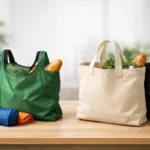
Reusable bags are a practical way to reduce single-use plastic, but their shape and material matter. A washable bag with a strong base can hold groceries more neatly than a thin bag that stretches and collapses. Structured sides help keep items upright, which makes the bag easier to load, unload, and carry without unexpected shifts.
Look for handles that are securely attached and long enough to work with your preferred carrying method. Short handles may be convenient for hand carrying but can be uncomfortable when a bag is full. Long shoulder straps can distribute weight differently, though they may swing into your side or pull on one shoulder if the bag is overloaded.
Foldable reusable bag systems are useful because they make it easier to keep bags with you. The best bag for reducing waste and carrying stress is the one you remember to bring into the store. Keeping a compact set in the car, by the front door, or in a work bag removes one more point of friction from the shopping routine.
Make the Walk From Car to Kitchen Easier
Pain relief is not only about what is in your hands. It also comes from how you move. Keep bags close to your body instead of letting them hang at arm’s length. Walk at a steady pace, especially on uneven surfaces, and avoid twisting while holding a heavy load. If you need to open a door, set the bags down briefly rather than trying to hold everything while reaching and turning.
At the car, load heavier bags first and place lighter, crushable items on top or apart from them. When unloading, bring out the bags you can comfortably manage together instead of grabbing every available handle. A little planning at the trunk saves a lot of awkward readjusting halfway to the door.
For recurring grocery trips, create a simple routine: reusable bags packed, carrier stored where you can reach it, heavy items distributed, and one hand kept as free as possible for keys, doors, or balance. These small changes are easy to repeat, which is what makes them useful.
A comfortable grocery carry should not depend on sore fingers and a white-knuckle grip. Give the load a better place to rest, keep bags organized, and let your hands do less of the hard work. The walk inside can be the easiest part of the shopping trip.
 Previous Post
 Next Post