
Apartment Grocery Carrying Without Hand Pain
A full grocery run can feel manageable in the parking lot, then completely different once apartment grocery carrying includes a broken elevator, a long hallway, a heavy exterior door, and keys somewhere at the bottom of a bag. The problem is rarely just the weight. It is the way thin handles concentrate that weight on your fingers while every bag swings, tangles, and fights for space.
For apartment residents, getting groceries home is not a single lift. It is a series of small, awkward tasks: loading the car, unloading it, crossing the lot, opening doors, waiting for an elevator, walking corridors, and putting everything away. A better carrying setup makes those steps easier without turning a simple shopping trip into a complicated system.
Why apartment grocery carrying feels harder
A house with a driveway lets you unload close to the kitchen. Apartment living usually adds distance and obstacles. You may park on another level, carry bags up stairs, or make room for neighbors in a narrow elevator. Even a modest grocery load becomes tiring when it is divided among six or eight plastic bags with narrow handles.
Thin handles can press into your hands and make your grip feel less secure. When bags are unevenly loaded, one side pulls harder than the other. That strain often travels beyond the fingers into the wrists, forearms, shoulders, and lower back. If you already deal with arthritis, reduced grip strength, hand pain, or a busy schedule that leaves no time for repeat trips, the usual “just carry more” advice does not help.
The goal is not to prove how much you can carry at once. It is to make each trip controlled, comfortable, and less likely to end with a broken bag or a jar rolling across the lobby.
Start at the store, not the apartment door
The easiest grocery carry starts with the way items are bagged. Before checking out, place the heaviest items in a few sturdy bags rather than filling every bag to the limit. Canned goods, beverages, bottles, and pantry staples belong low in the bag, balanced across both sides of your load.
Keep fragile groceries separate when possible. Eggs, bread, berries, and chips should not sit under a gallon of milk or a package of frozen food. This is not only about protecting groceries. A balanced bag is easier to hold steady while opening a door or stepping onto a curb.
Reusable bags can help because many have wider handles and more structure than thin plastic bags. They also reduce the pile of disposable bags collecting under the sink. But reusable bags still need a practical loading plan. A large bag that is overloaded can be just as hard on the hands and shoulders as several smaller ones.
If you use store bags, ask the cashier to avoid packing too many heavy items together. If you bag your own groceries, take an extra minute to distribute the weight. That minute can save you from stopping halfway down the hall to rearrange handles that are cutting into your fingers.
Use a carrier that gathers handles securely
Loose bag handles create the most common apartment carrying problems: tangling, slipping, and painful pressure points. A bag carrier gathers multiple handles into one more comfortable grip, so you can manage bags as a single organized load instead of a cluster of swinging straps.
This approach is especially useful when you need one hand free. You may need it for a key fob, elevator button, stair rail, phone, door handle, or a child’s hand. Carrying several bags in one secure holder leaves the other hand available without forcing you to pinch plastic handles between your fingers.
The BAGGLER® is designed for this exact job. Its patented design holds thin-handle, rope-handle, and plastic shopping bags together, helping reduce handle strain and bag entanglement. With a stated carrying capacity of up to 54 pounds, it offers a compact option for consolidating a realistic grocery load before the walk from vehicle to apartment.
Capacity is helpful, but it does not mean every trip should be packed to the maximum. Your comfort, route, and ability to safely control the load still matter. A fourth-floor walk-up calls for a different plan than a ground-floor apartment with parking outside the entrance.
Plan for your building’s real obstacles
Every apartment building has one spot that makes grocery carrying harder. It may be the heavy lobby door, a steep stairwell, a parking garage, or the distance from elevator to unit. Identify that point and build your routine around it.
If you take stairs
Stairs reward balance over speed. Keep the load close to your body and avoid carrying more than you can control while keeping one hand available for the rail. If your bags are heavy, make two trips or use a small rolling cart for the longest part of the route.
Never stack bags so high that you cannot see the steps in front of you. A dropped grocery item is frustrating. A missed stair is worse. On rainy or icy days, reduce the load further and prioritize stable footwear over making fewer trips.
If you use an elevator
Elevators solve the stair problem but add timing and space constraints. Consolidated bags are easier to bring inside without blocking the doorway or setting items on a potentially dirty floor. Keep bags positioned at your sides rather than in front of your legs, especially when entering or exiting.
If the elevator is crowded, it is often safer to wait for the next car than to wedge yourself, a cart, and several bags into a tight space. Saving two minutes is not worth crushed bread, spilled groceries, or an uncomfortable ride for everyone else.
If you have a long hallway
Long corridors are where swinging bags become exhausting. A secure carrier reduces the side-to-side movement that pulls at your wrist and bumps your legs. Keep the weight even between hands if you are carrying two groups of bags. If one side is clearly heavier, switch hands before fatigue turns into a strained grip.
Keep a simple grocery-to-home routine
A good system should be easy enough to repeat when you are tired. Keep reusable bags, a bag carrier, and insulated bags in the same place in your car or near your apartment door. When the tools are where you need them, you are less likely to leave them behind and end up juggling loose handles again.
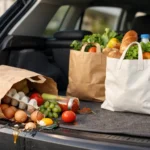
At the car, load cold and frozen items into an insulated bag first. Group the remaining bags by weight, then gather handles before you start walking. Check that bottles are upright, bags are not tearing, and nothing fragile is trapped under a heavy item.
Once inside, set bags on a clear counter or floor area instead of scattering them across the kitchen. Put away frozen and refrigerated food first, then pantry items. This last step matters because it prevents a rushed unpacking session from becoming another source of clutter and dropped groceries.
Know when a cart is the better choice
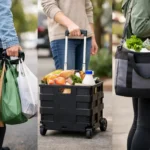
A bag carrier and reusable bags make a strong everyday setup, but they are not the answer for every load. A rolling cart may be the better choice for a warehouse-sized shopping trip, a case of water, multiple pet-food bags, or a long route across a parking garage. The right tool depends on the amount of weight and the path ahead.
Many apartment shoppers use both. Carry smaller grocery runs with organized bag handles, then bring out a cart for bulky loads. That is practical, not excessive. The best routine is the one that keeps groceries secure and makes it easier to shop again next week.
The next time you park with a trunk full of bags, pause before putting every handle on your fingers. A small change in how you organize the load can leave you with steadier hands, intact groceries, and enough energy to enjoy what you brought home.
 Previous Post
 Next Post