
How to Carry Retail Bags Easier Without Strain
A shopping trip can feel finished at the register, but the hardest part often starts in the parking lot. Thin plastic handles cut into your fingers, paper bags twist sideways, and one overloaded bag can pull everything else out of balance. Learning how to carry retail bags easier is less about brute strength and more about distributing weight, organizing handles, and using the right support.
Whether you are carrying groceries, department-store purchases, pharmacy items, or a mix of all three, a few practical changes can make the walk from store to car – and car to home – much more comfortable.
How to Carry Retail Bags Easier From Store to Car
Start before you leave the checkout lane. The way bags are packed affects how they carry. A bag with one heavy item at the bottom and lighter items on top is usually more stable than a bag filled randomly. Ask for heavy products to be divided across multiple bags rather than concentrated in one.
This matters especially with glass jars, canned goods, detergent, pet food, or bulky retail purchases. A bag may look manageable when you lift it from a counter, but its handles can stretch or tear once it swings at your side. Balanced bags are easier on your hands and less likely to tip over in the car.
Before you start walking, take a moment to group bags by weight and destination. Keep the heaviest bags closest to the center of your body, where you have better control. Lighter bags can go on the outside. If one bag has a long, awkward shape, carry it separately instead of forcing it into a crowded handful.
Avoid the common habit of loading every handle onto two or three fingers. It may save a trip, but it concentrates pressure in a small area and can leave your fingers sore, numb, or stiff. If you regularly experience hand, wrist, shoulder, or grip discomfort, fewer bags per hand is not a failure. It is a smarter way to protect your body.
Use a Bag Carrier to Spread the Load
The biggest problem with retail bags is usually not the total weight. It is the handle design. Thin handles, rope handles, and plastic loops create pressure points, tangle together, and slide against one another as you walk.
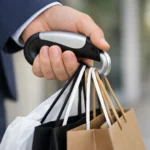
A dedicated bag carrier gives those handles a wider, more secure place to rest. Instead of carrying several tight loops across your fingers, you can gather them onto one ergonomic handle. This helps distribute the load across your hand while keeping bags grouped together.
The BAGGLER is designed for exactly this everyday problem. Its patented bag-carrying design holds multiple types of shopping bag handles, from thin plastic loops to rope-handle retail bags, with a rated carrying capacity of up to 54 pounds. That means less handle digging, less tangling, and fewer bags slipping free while you move from the store to the vehicle or from the driveway to the kitchen.
A bag carrier does not make an overloaded load safe. You still need to use good judgment, especially with fragile items or bags that feel close to tearing. But it can make a reasonable load much easier to manage and help you take fewer back-and-forth trips.
Load the handles with intention
When using any bag carrier, place the heaviest bags toward the center. Add lighter bags around them so the weight stays balanced. If the bags are uneven, do not assume you can fix the problem by gripping harder. Shift an item from the heavy bag into a lighter one, or carry the extra bag separately.
Keep handles flat as you load them. Twisted handles can pinch, weaken, and make bags harder to remove when you arrive home. A quick adjustment in the parking lot is easier than untangling a pile of bags at your front door.
Make Reusable Bags Work Harder for You
Reusable bags can be easier to carry than single-use bags because they generally have wider handles and stronger construction. But they work best when you choose the right size and avoid filling every inch just because there is room.
A large reusable bag is useful for lightweight, bulky purchases such as paper towels, clothing, or boxed household goods. It is not always the best choice for dense groceries. A giant bag full of canned food can become too heavy to lift comfortably, even if the bag itself is strong enough to hold it.
For heavier shopping, use several medium-size reusable bags rather than one oversized tote. This gives you better control and makes it easier to divide the weight between both sides of your body. Foldable reusable bag systems are also useful to keep in your car, purse, or entryway, so you are not stuck using thin disposable handles when you make an unplanned stop.
Wash reusable bags regularly, particularly bags used for groceries. Clean, dry bags are more pleasant to use and help prevent odors or residue from building up after spills.
Prevent Drops, Snags, and Spills on the Way Home
Many bag-carrying problems happen because shoppers rush. A bag catches on a car door, a handle slips while keys are being found, or a paper bag is set down on wet pavement. A few simple habits reduce those frustrating moments.
First, clear your hands before lifting bags. Put away your wallet, phone, receipt, and keys. Trying to carry bags while holding loose items gives you less grip and makes dropped purchases more likely.
Next, take a deliberate path to the car. If the lot is crowded, uneven, icy, or wet, use a cart as far as possible and avoid carrying more than you can control. Do not hook heavy bags over your wrist or forearm if they restrict movement or pull your balance off center. Carrying a slightly smaller load is usually faster than recovering spilled groceries or dealing with an injury.
When loading the car, place fragile items first where they will not shift. Keep bags upright, and use the floor behind a front seat or the trunk corners to prevent rolling. Heavy bags should sit low and close to the vehicle rather than on top of lighter bags.
Plan the trip from car to door
The second carry is often tougher because you are tired, the driveway may be dark, and there may be stairs involved. Park as close as is safely practical, then assess the load before grabbing everything at once.
If you have several bags, make one organized trip with a carrier or reusable bag system and one smaller follow-up trip if needed. For stairs, keep one hand free for the railing whenever possible. This is especially important when carrying glass, liquids, or anything that shifts inside the bag.
Reduce Strain With Better Carrying Habits
Good bag organization helps, but body position matters too. Keep your shoulders relaxed instead of lifting them toward your ears. Stand tall, hold the load close to your body, and avoid leaning sharply to one side. If one hand is carrying more, switch sides when it is safe to do so.
Do not twist while holding a heavy load. Turn your feet and move your whole body instead. This small adjustment can reduce strain on your back and shoulders, particularly when you are placing bags into a trunk or setting them on a counter.
If bags regularly cause pain, tingling, or lingering soreness, treat that as useful feedback. The answer may be lighter loads, more trips, a cart, or an ergonomic carrier. Convenience should not require sacrificing your hands and wrists every week.
Keep a Simple Carrying System Ready
The easiest system is the one you will actually use. Keep reusable bags and a bag carrier in the same place: your car door pocket, trunk organizer, coat closet, or everyday tote. After unpacking, return them there right away.
It also helps to keep a small laundry basket, folding cart, or sturdy bin near the entrance. You can place grouped bags inside once you reach the door, then move them safely indoors without handles dragging across the floor or purchases rolling loose.
The goal is not to turn routine shopping into a complicated process. It is to remove the small points of friction that make every trip feel harder than it should. With balanced packing, a secure way to gather handles, and a willingness to make one extra trip when needed, carrying retail bags can feel far more manageable – right up to the moment you set everything down at home.
 Previous Post
 Next Post